
It’s Tuesday morning, and we won’t be rehashing details of the events. There’s a lot of great content out there to put things into perspective from folks who know tons more about waging war, the political dynamics of the region, and/or the states/people involved. Instead, we’re going to talk markets, because we’re portfolio managers, not fighter pilots. My wife knows one who is both, but it’s rare.
Markets managed rather well on Monday. After a weak start for the first trading day since hostilities broke out, North American markets managed to finish in the green. Oil was up, as were safe havens, including gold and the USD. Tuesday looks like another weaker start, with everything down from overseas markets to bonds, gold to North American equities. Rebounding from this one may be an even bigger challenge. The U.S. dollar and oil are just about the only things higher.
Why the Initial Muted Response From Markets?
#1 The conflict is not really a surprise – Tensions had been building over the past few months and weeks, with military assets increasingly moved into the region. Add this to a U.S. administration that appears to want to use its military more, and the surprise would have been if there wasn’t a conflict.
Markets generally move when surprised. Perhaps Iran’s retaliation on some of its neighbours is a bit of a surprise, or a few signs that the conflict is spreading. More U.S. casualties would have been a negative surprise, as would the targeting of energy infrastructure, which is possibly starting to show up now. The magnitude is clearly greater than the brief bombing of nuclear development sites last year or the Iran-Israel missile exchanges of April 2024, but so far, not many surprises.
Obviously, this can change; that’s why they are called ‘surprises.’
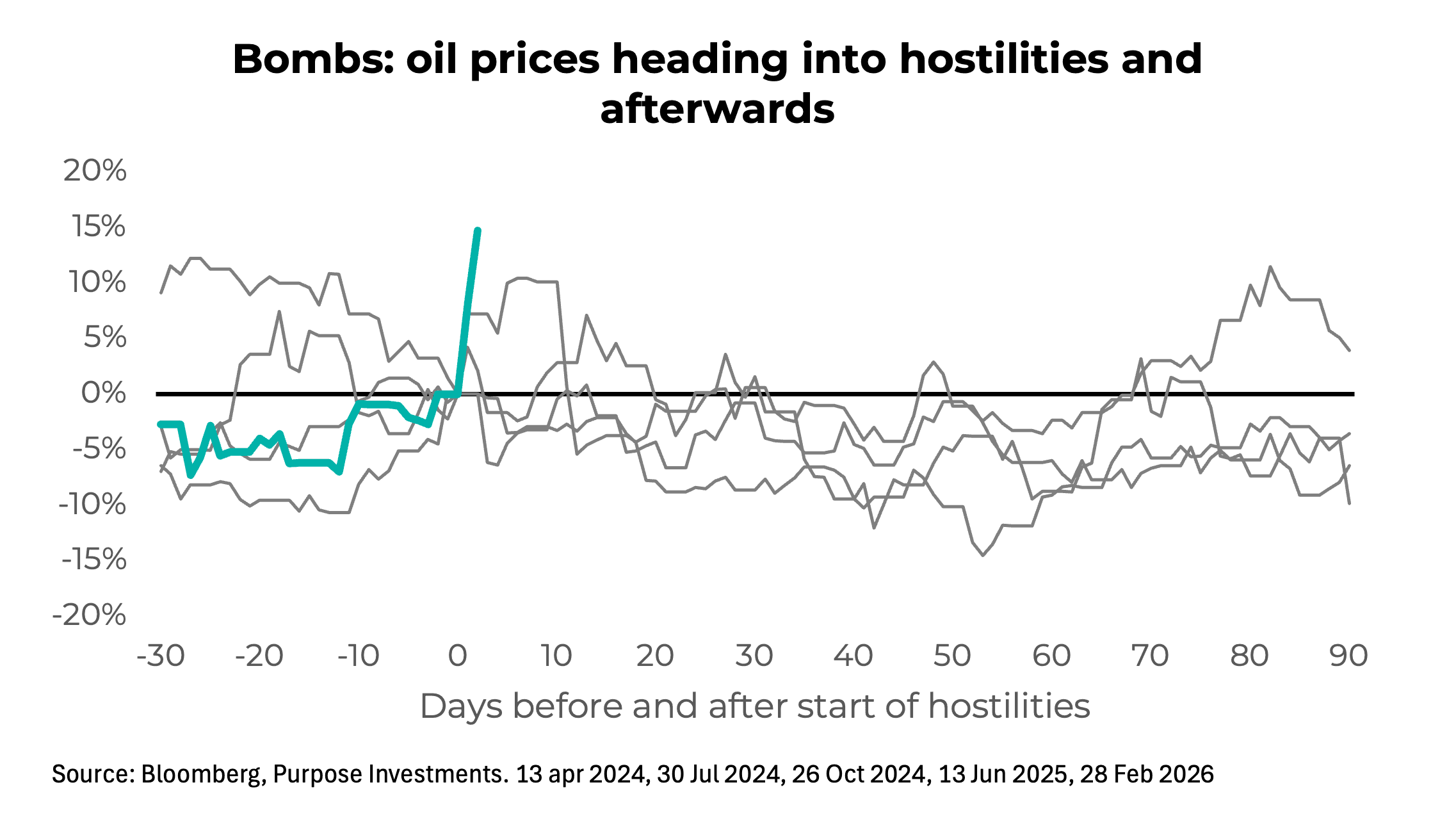
#2 A learned response of boots versus bombs – The market remembers, with short-term memory much more dominant than long-term. Putting boots on the ground leads to much longer and more painful market reactions. Dropping bombs can end as quickly as it started.
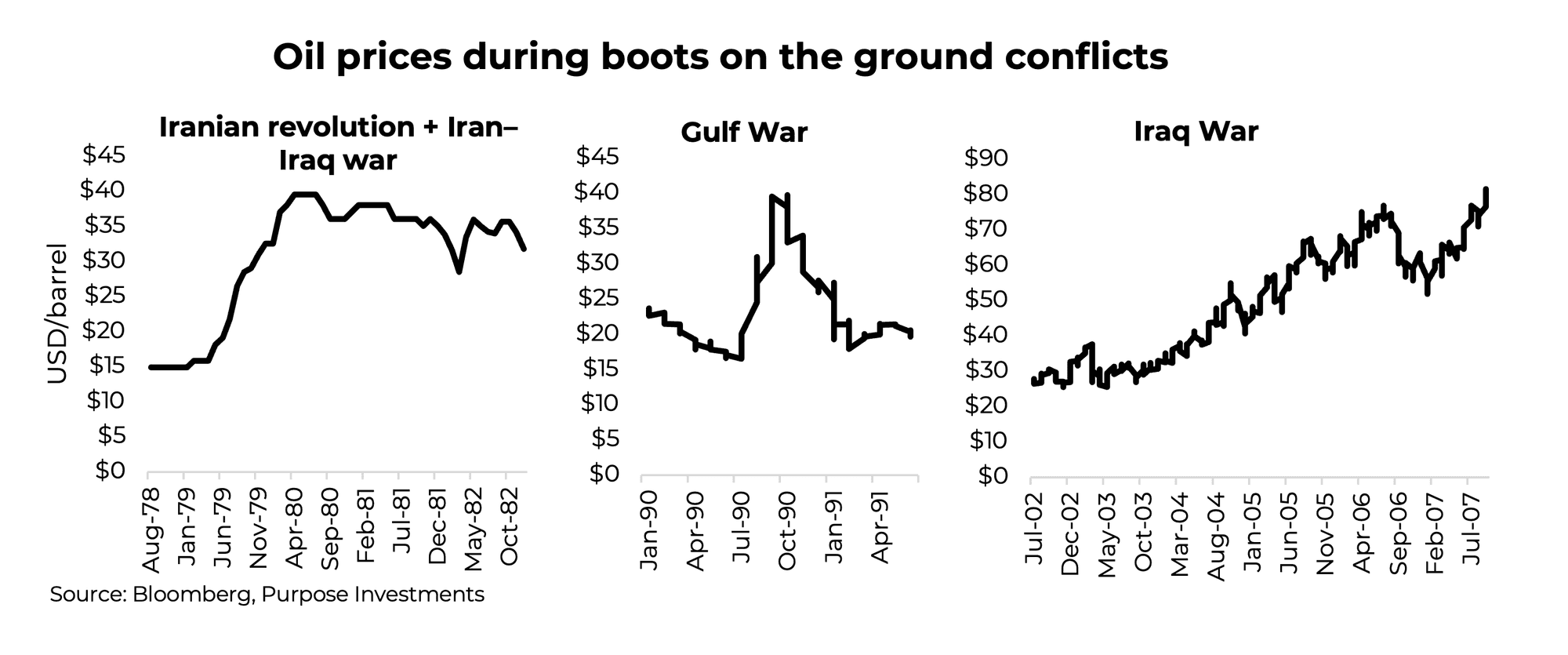
The following chart shows the past five times Iran has been bombed and the path of oil prices. The turquoise line is the current situation, already off to a bigger start than past episodes. The general trend is for a spike, then oil prices come back down. It’s a very different chart if you go back in time to boots on the ground in the next set of charts, which had often seen a doubling of oil prices.
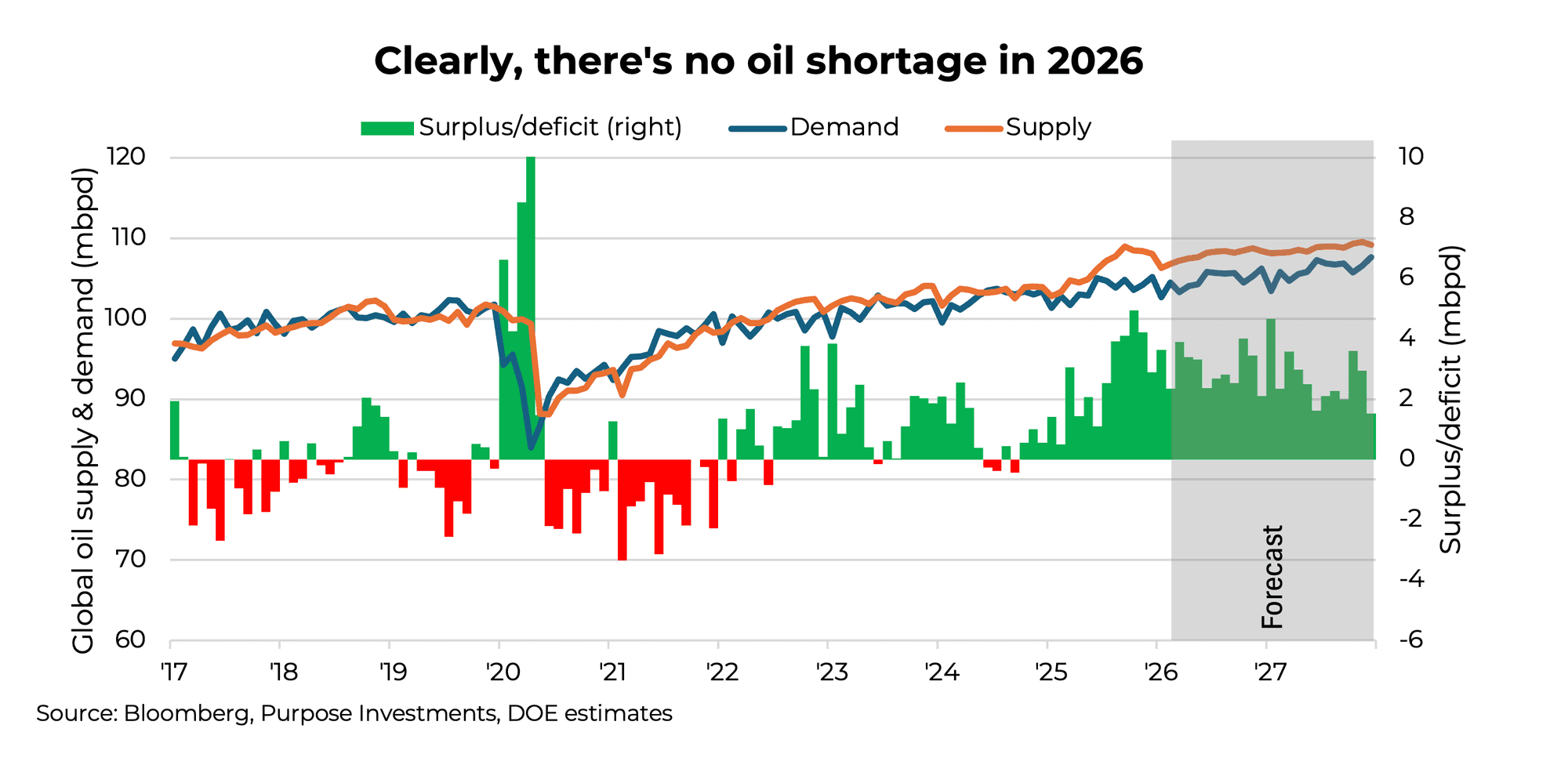
One reason the energy markets may endure this supply disruption a bit better is the amount of global supply versus demand. A surplus of two million barrels a day certainly makes managing a temporary supply disruption much easier.
Trimming Energy
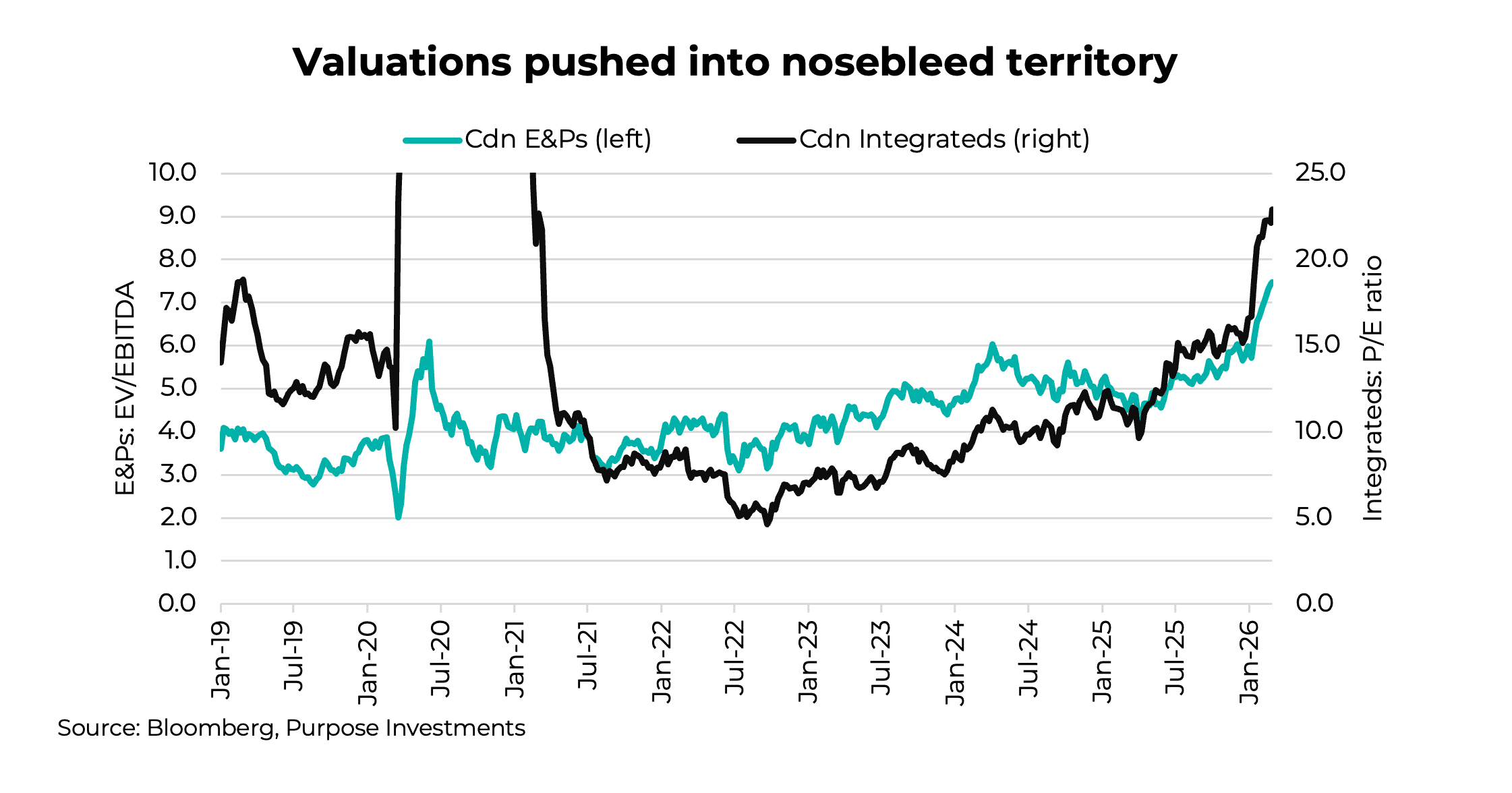
Shortly after the open on Monday, we reduced energy exposure in our dividend mandates. The Fund/ETF version went from 17.4% energy to 13.9%, reducing integrated and E&P positions. Prior to the hostilities, we had become a bit wary of the strong move higher in energy stocks, which was the second-best performing sector in the TSX after the gold-powered Materials. Prices moving higher, combined with estimates for 2026 and 2027 moving lower, is a tough combination.
Over the past year, Canadian integrateds’ 2026 earnings estimates have declined by -30% and -16% for 2027. Rising stock prices have pushed the P/E ratio to over 22x, a far cry from 10x only a year ago. EV/EBITDA for Exploration & Production companies (E&Ps) have risen from 5x a year ago to 7.5x today. That’s rich.
Final Thoughts
Energy has been our biggest performance driver so far in 2026, and we are not bearish on exposure. Fortunately, as hostilities broke out, we were overweight energy, with much more exposure to integrateds and E&Ps compared to pipelines. The former have simply risen more in response to rising oil prices. For this, we say, “Thanks, market,” and took some chips off the table.
We don’t know how this conflict plays out; it could be short or it could become drawn out. Nobody knows. The longer it goes on, the higher the probability of a risk-off event, which may be a buying opportunity given the economic backdrop. As the Chinese proverb goes: “We’ll see.”
— Craig Basinger is the Chief Market Strategist at Purpose Investments
Get the latest market insights in your inbox every week.
Sources: Charts are sourced to Bloomberg L.P.
The content of this document is for informational purposes only and is not being provided in the context of an offering of any securities described herein, nor is it a recommendation or solicitation to buy, hold or sell any security. The information is not investment advice, nor is it tailored to the needs or circumstances of any investor. Information contained in this document is not, and under no circumstances is it to be construed as, an offering memorandum, prospectus, advertisement or public offering of securities. No securities commission or similar regulatory authority has reviewed this document, and any representation to the contrary is an offence. Information contained in this document is believed to be accurate and reliable; however, we cannot guarantee that it is complete or current at all times. The information provided is subject to change without notice.
Commissions, trailing commissions, management fees and expenses all may be associated with investment funds. Please read the prospectus before investing. If the securities are purchased or sold on a stock exchange, you may pay more or receive less than the current net asset value. Investment funds are not guaranteed; their values change frequently, and past performance may not be repeated.
Certain statements in this document are forward-looking. Forward-looking statements (“FLS”) are statements that are predictive in nature, depend on or refer to future events or conditions, or that include words such as “may,” “will,” “should,” “could,” “expect,” “anticipate,” “intend,” “plan,” “believe,” “estimate,” or other similar expressions. Statements that look forward in time or include anything other than historical information are subject to risks and uncertainties, and actual results, actions, or events could differ materially from those set forth in the FLS. FLS are not guarantees of future performance and are, by their nature, based on numerous assumptions. Although the FLS contained in this document are based upon what Purpose Investments and the portfolio manager believe to be reasonable assumptions, Purpose Investments and the portfolio manager cannot assure that actual results will be consistent with these FLS. The reader is cautioned to consider the FLS carefully and not to place undue reliance on them. Unless required by applicable law, it is not undertaken, and is specifically disclaimed, that there is any intention or obligation to update or revise FLS, whether as a result of new information, future events, or otherwise.


