As we enter the sixth month of the Iranian conflict after numerous ceasefires, marine traffic in the Strait of Hormuz is back to a trickle and the world continues to draw down on oil & gas inventories. This past weekend we saw Iran release their 6-point plan for the U.S. before a deal can happen:
1) Never threaten Iran with any language or insult the sanctities of this nation.
2) End the war and aggression against Iran and its allies in Lebanon, Palestine, Yemen, and Iraq forever.
3) Lift the naval blockade and withdraw its military forces (naval and air) from around Iran.
4) Pay the damages of the two wars of aggression and imposition on Iran without any reduction.
5) Lift the cruel and illegal sanctions against the Iranian nation.
6) Unconditionally release the frozen and stolen assets of the Iranian people.
7) Trump to kiss the foot of the Ayatollah.
Obviously I included a fake point there but funny enough it probably has a higher probability of happening versus some of the other points. The full unconditional surrender of U.S. and Israel is just so unrealistic that we're likely still quite far out from any long lasting resolution of the conflict. While the flip flop continues, it's interesting to note the parallels between what's playing out in the Strait of Hormuz today versus the Suez crisis that took place in 1956, and as the famous Mark Twain quote says "History does not repeat itself, but it rhymes", what took place then might be a leading indicator of how the Iranian conflict could play out.
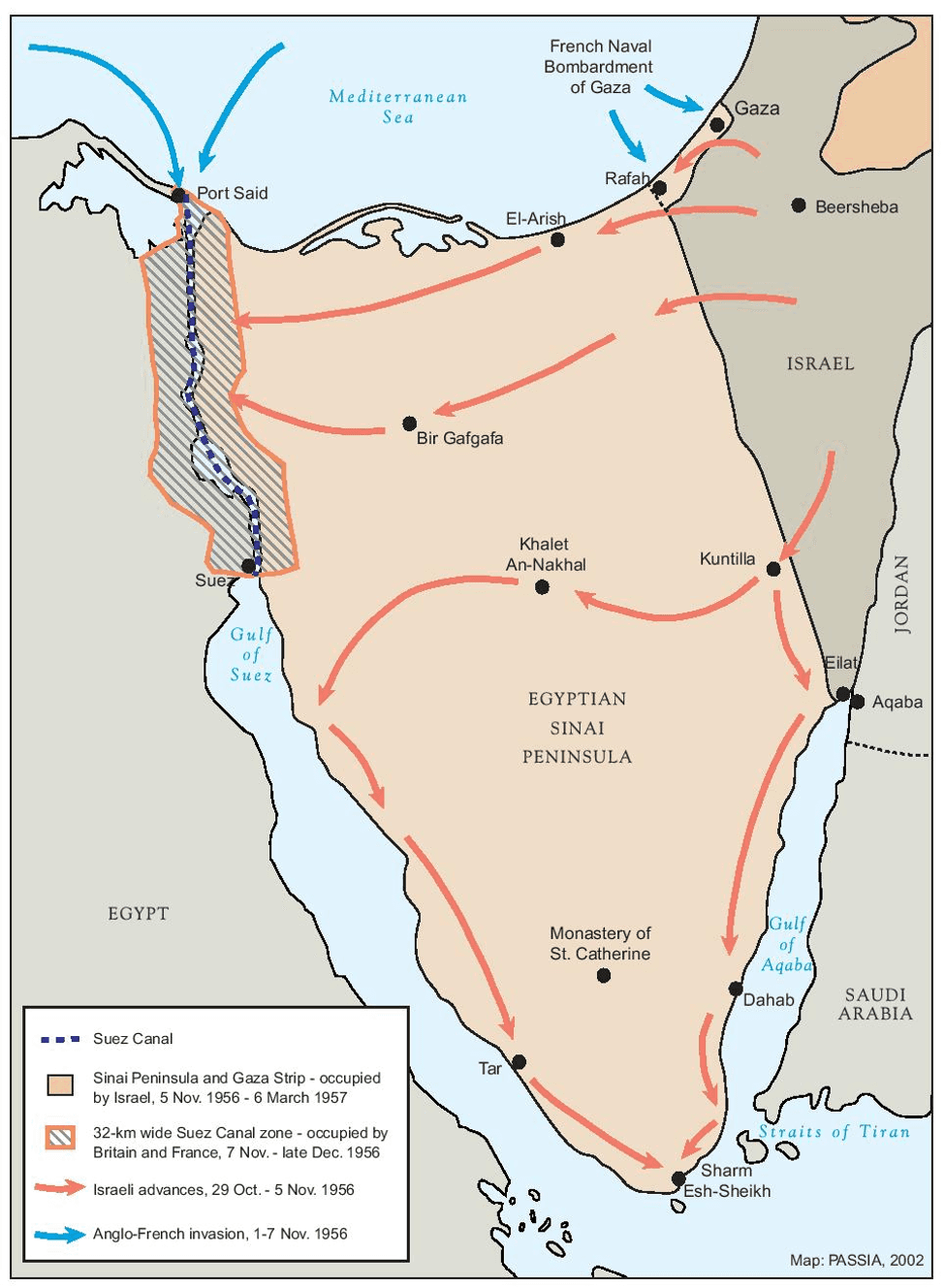
As a synopsis of the Suez crisis, Egyptian president Nasser back in July 1956 kicked off the event by nationalizing the Suez Canal Company which had been built and operated since 1869 by the French and British government. Nasser did this because the U.S. and Britain withdrew financial backing for the Aswan High Dam project as they did not like Egypt's alignment with the USSR at the time, and as part of that fallout, Nasser announced that the canal would be nationalized and the toll revenues would be used to fund the dam instead. Britain and France were obviously not impressed as the canal was a crucial trade route for oil, and despite Britain winding down on its global empire post WW2 they still had significant economic interests in Africa / Asia. After a failed secret plot between Britain-France-Israel where Israel was to invade the Egyptian Sinai Peninsula with British and French forces using it as a pretense to take over the canal for "peace keeping", there was global condemnation against Britain and France, the U.S. was furious as they weren't informed of the military action and felt the move could further push Arab nations towards the Soviet Union (The Soviets were also trolling the U.S. by talking about nukes even back then but their ballistic missiles tech was in its infancy), and the United Nations got involved with the United Nations Emergency Force (UNEF) deployed as the first armed UN peacekeeping mission in history. After the conflict, both British and France PMs resigned in 1957, and Nasser came out a hero as he cemented himself as a leading figure of Arab nationalism against foreign powers. More importantly, this was a clear realization for Britain that they were no longer the great empire they once were.
Long story short, the playbook from the Suez crisis is: 1) someone does something with unintended consequences, 2) incumbent fends off invader through political means or asymmetrical warfare, 3) blunder is so bad that it causes a political regime change for the failed invaders. While we don't know yet the outcome of the Iranian war, with what's played out so far I'm getting the sense that history might repeat itself with slightly different players involved.
— Ritu Ghai is Senior Director, Product Optimization, and Jeremy Lin is Portfolio Manager at Purpose Investments.
The content of this document is for informational purposes only and is not being provided in the context of an offering of any securities described herein, nor is it a recommendation or solicitation to buy, hold or sell any security. The information is not investment advice, nor is it tailored to the needs or circumstances of any investor. Information contained in this document is not, and under no circumstances is it to be construed as, an offering memorandum, prospectus, advertisement or public offering of securities. No securities commission or similar regulatory authority has reviewed this document, and any representation to the contrary is an offence. Information contained in this document is believed to be accurate and reliable, however, we cannot guarantee that it is complete or current at all times. The information provided is subject to change without notice.
Certain statements in this document are forward-looking. Forward-looking statements ("FLS") are statements that are predictive in nature, depend on or refer to future events or conditions, or that include words such as "may,” "will,” "should,” "could,” "expect,” "anticipate," intend,” "plan,” "believe,” "estimate" or other similar expressions. Statements that look forward in time or include anything other than historical information are subject to risks and uncertainties, and actual results, actions or events could differ materially from those set forth in the FLS. FLS are not guarantees of future performance and are by their nature based on numerous assumptions. Although the FLS contained in this document are based upon what Purpose Investments and the portfolio manager believe to be reasonable assumptions, Purpose Investments and the portfolio manager cannot assure that actual results will be consistent with these FLS. The reader is cautioned to consider the FLS carefully and not to place undue reliance on the FLS. Unless required by applicable law, it is not undertaken, and specifically disclaimed, that there is any intention or obligation to update or revise FLS, whether as a result of new information, future events or otherwise.