
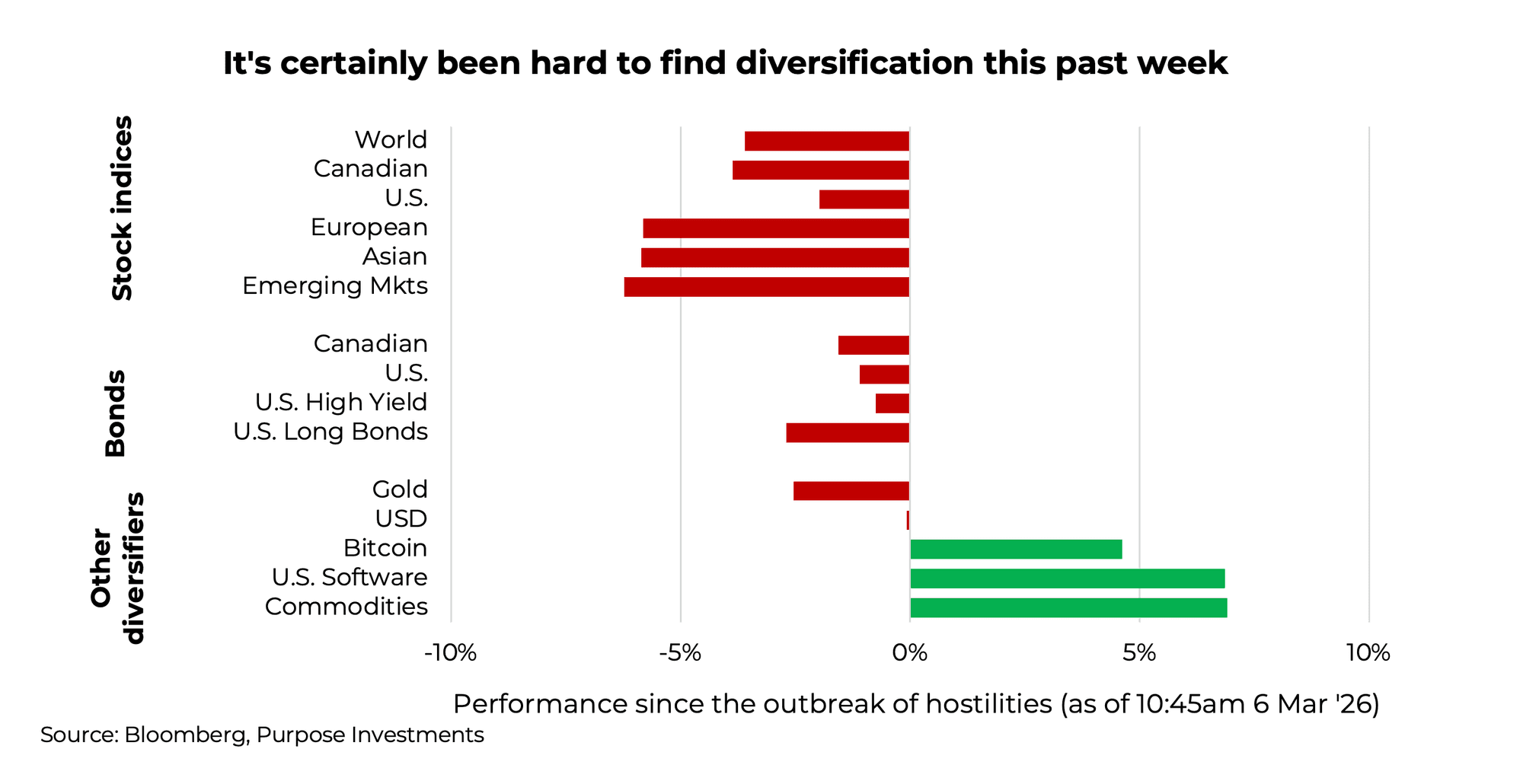
One might expect that if markets sell off due to a material rise in geopolitical risk from the outbreak of war between the U.S./Israel and Iran, then gold should be a good diversifier. Clearly, that wasn’t the case this past week. Bonds aren’t doing so great, either. Riding to the rescue of portfolios are bitcoin and software stocks; that certainly is not following the traditional script. And of course, commodities are surging thanks to a huge rise in oil prices.
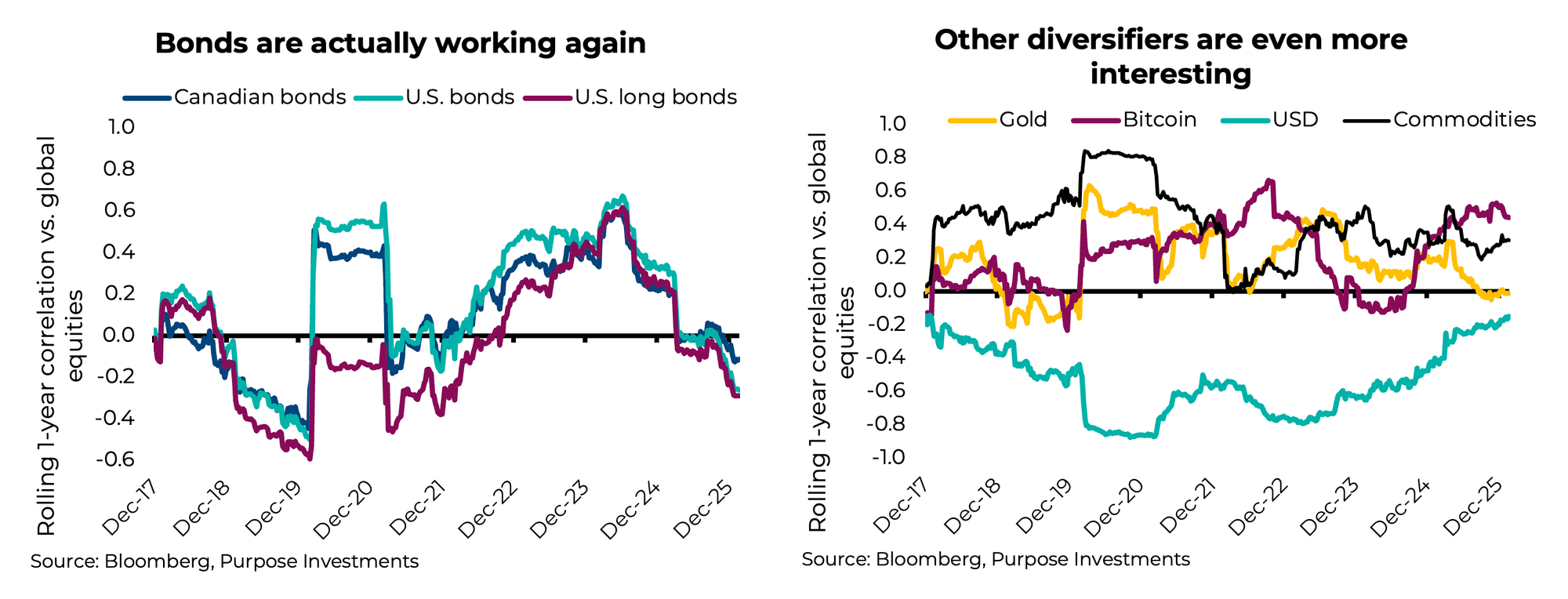
It isn’t just this past week that portfolio diversification has been more challenging. Everyone remembers 2022/23 when the bond/equity correlation became much more positive than in previous years, which made the market drop of 2022 much more painful. Bond/equity correlations actually remained strongly positive into 2024, but nobody minded as both equities and bonds were moving higher in price. Funny that.
While bonds haven’t helped much this past week, we would point out that their correlation to equities has been falling, which is good news. Certainly a vast improvement from 2022/23. International equities, while pretty strongly correlated given they are part of global equities, have seen their correlations fall a bit, too.
The other unique diversifiers are perhaps even more interesting. For many years, U.S. dollar exposure has been a really good diversifier for Canadian investors. From a correlation perspective, this has been diminishing of late. Bitcoin, gold, and commodities all generally have positive correlations to global equities, but it’s certainly on the lower side.
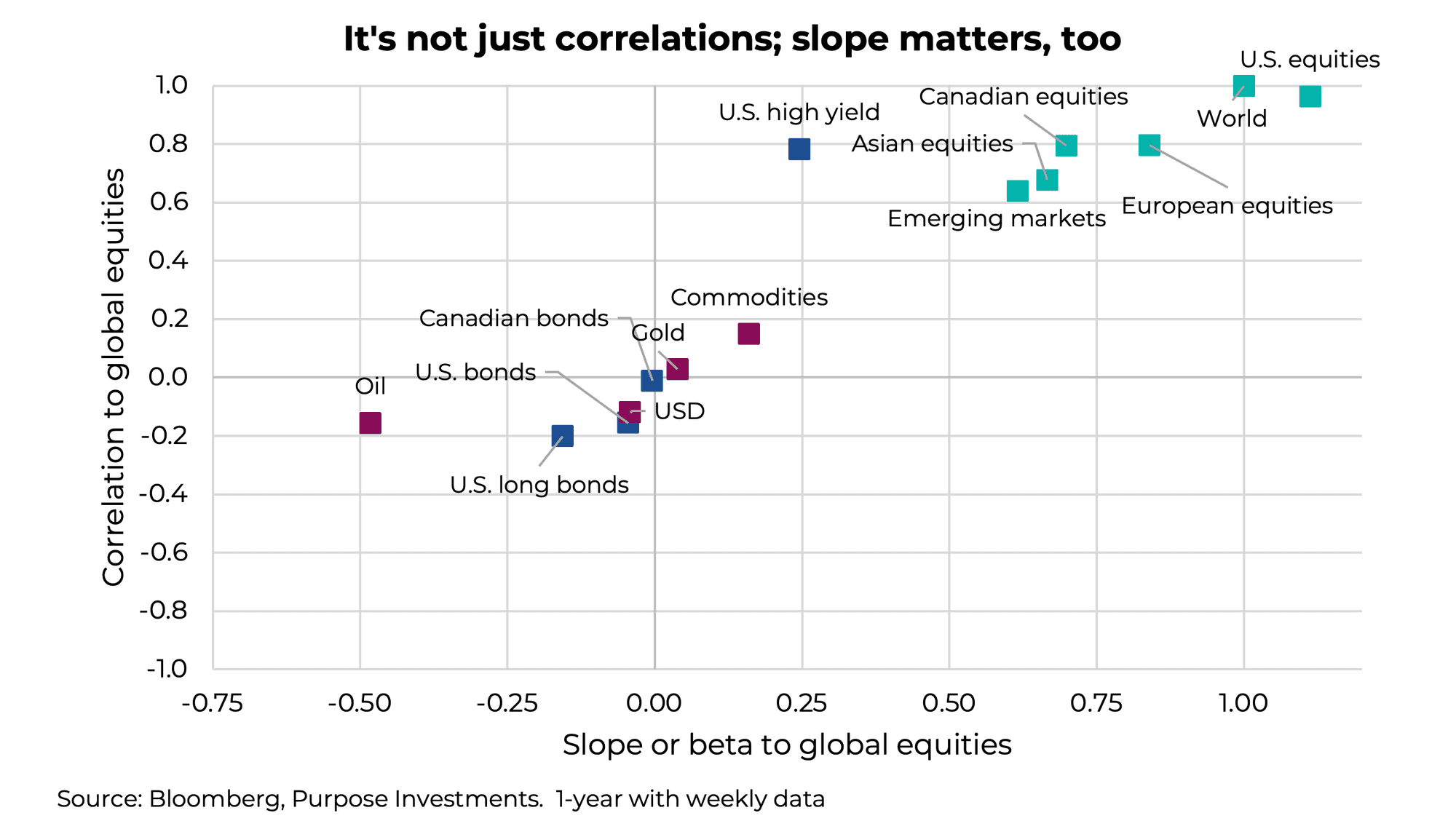
Correlations tell just one part of the story: the average relative direction. The other part is the degree of the move. The following scatter chart shows a basket of asset class categories plotted with correlation to global equities on the y-axis and slope on the x-axis. For example, U.S. high yield is strongly correlated to equities, but the slope is much lower, which suggests the direction will often be the same, but high yield would move much less. This helps diversification.
This is just one week of market weakness that once again is highlighting the need to really think about portfolio construction, namely diversified defence. With the Covid correction in 2020, bonds worked well after liquidity was restored, as did the U.S. dollar. During the inflation correction of 2022, bonds sucked and gold did well, as did more exotic income strategies that were less interest rate sensitive. The Liberation Day tariff-induced correction saw different defensive strategies work best. It’s a simple fact: these markets require multiple types of defence as corrections have become less atypical.
We were joking in the opening by highlighting bitcoin and software as diversifiers this past week. The math adds up, given that they went up this week as most things went down. But don’t read too much into this: they went up because they had already fallen so much. Bitcoin was over $120K in October and had fallen to the low $60Ks. One of the more popular ETFs tracking U.S. software equities had fallen from over $115 to below $80.
Final Thoughts
This market is fragile, and the sudden ramp of geopolitical risk is clearly being felt. Bombing campaigns can end as quickly as they began. But risks are now high, and while markets have fallen, they’re still not anywhere near correction territory. We do wonder: if markets fall more, will the Trump Always Chickens Out (TACO) playbook apply to armed conflicts, or is it just tariffs?
For now, we believe it’s important to stay a bit defensive and, most importantly, have a diversified defence within portfolios. Never a dull moment.
Craig Basinger is the Chief Market Strategist at Purpose Investments Inc.