
The inflation spike in 2021 and 2022 remains pretty fresh in investors’ minds. Remember how most were convinced it would simply be ‘transitory’ due to the abrupt stop and start of the global economy due to COVID? Then both Canada and the U.S. core inflation rose to 6-7% pace before coming back down over the past few years. With perfect hindsight this spike was logical: we shut down the economy, everyone stopped spending, then opened it up to a populace with excess savings and accumulated pent-up demand to do stuff. And that stuff didn’t necessarily mean going back to work. Prices spiked and wage growth rose to try luring workers back.
Then again, inflation is a very slow process so perhaps a two-year spike is transitory. Just in our current society’s mental model with shorter attention spans, anything that lasts longer than a couple weeks is now labelled a secular trend. More pertinent, there has been a recent uptick of inflation data raising some alarm bells. To get a bit better idea of the inflation pace, we will first turn to the 3-month annualized pace instead of the more often quoted year-over-year. It simply reacts quicker, which makes it more useful.
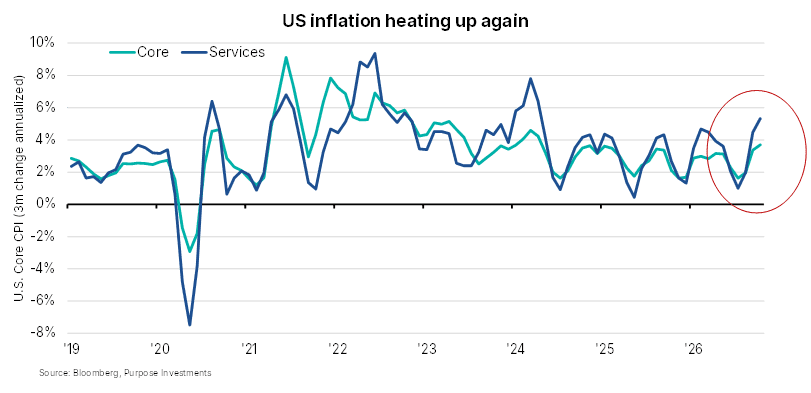
There is a bit more inflation risk that has been building. Globally, we have seen a mild uptick, similar to the U.S. Of course a big contributor is the elevated energy prices. While that doesn’t directly impact core inflation data, it does indirectly. The longer energy prices remain elevated, the impact grows. Many other commodity prices are up as well, including copper. On the demand side, the growth in global manufacturing has certainly contributed to higher input prices and those will impact end prices. Even China, often an exporter of deflationary pressure, doesn’t seem to be doing so anymore. China Producer Price Index is up 5.7%, certainly on the historical high side.
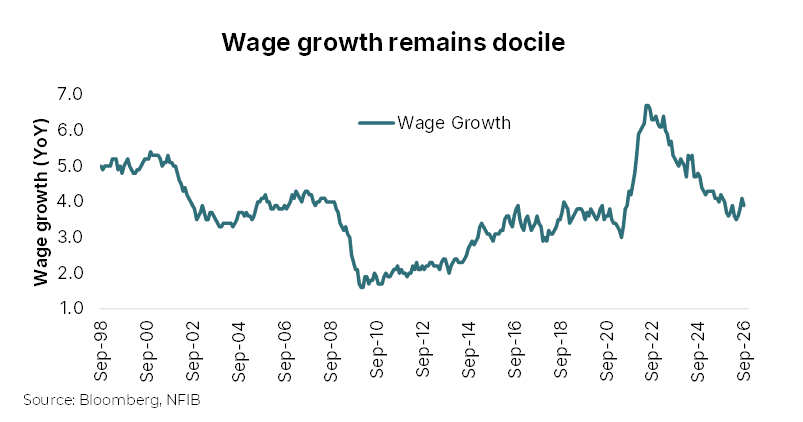
Some inflation does make sense and shouldn’t be too alarming. It would be natural to have some given a global economy that is doing well and strong investment demand building data centers. AI should help productivity over time, that would ease inflation pressures. But the building of the AI infrastructure is certainly inflationary. We would become more worried if wages started to rise or if inflation break evens turned up. So far these are muted.
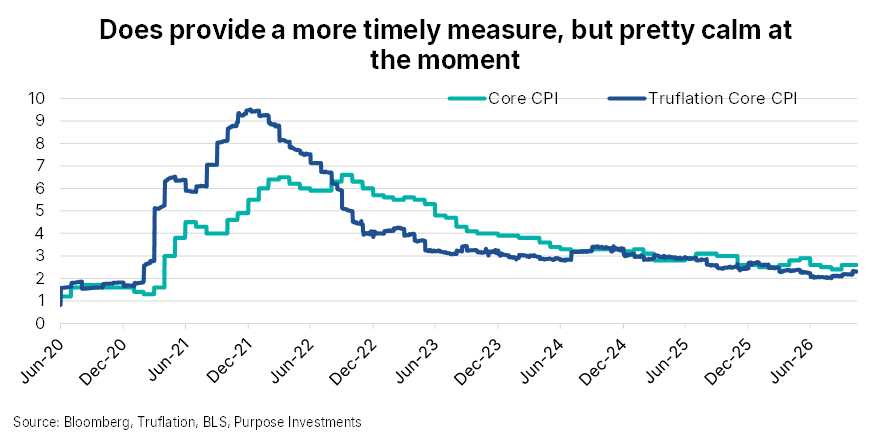
Let’s turn to some alternative data. Consumer Price Index data comes from the United States Bureau of Labor Services (BLS) and is calculated monthly across 75 urban areas from about 6,000 households and 22,000 establishments. Housing is based on owner-occupied rent, which has a pretty big weight and often subject to some skepticism. There is also adjustments for improvements and substitutes. It is quality work with a very thoughtful process that has evolved over decades. But we do now live in a data rich world and there are rising alternative sources. Truflation is a private data provider that amalgamates daily prices across an estimated 15 million items.
We are not saying whether one is better or not, but different which has benefits and drawbacks. Using alternative data to support or refute trends in the more popular government data is the difference between taking the guided tour and digging deeper. So far, we are not seeing any rise that would get us overly worried on the inflation front.
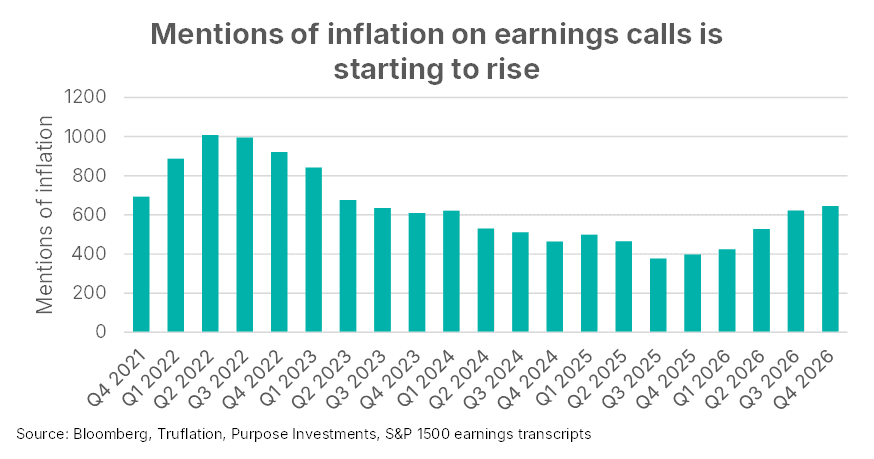
Another alternative data source is at the company level. The following chart measures the frequency of companies talking about inflation during conference earnings calls. While this has risen somewhat, it remains well below levels seen heading into the inflation spike of 2022.
Final Thoughts
Taken in totality, inflation risk has risen a bit over the past few months. If these trends continued to build in the coming months or quarters, we would become more worried. For now, we remain in the camp inflation is not high on our list of things to worry about. But it has risen enough to warrant some inflation protection within portfolios. That can take the form of real assets or cyclical equities that often benefit from rising inflation.
— Craig Basinger at Purpose Investments.
Get the latest market insights in your inbox every week.
Sources: Data and charts are sourced to Bloomberg L.P. as of 6 November 2026, unless specified otherwise.
The content of this document is for informational purposes only and is not being provided in the context of an offering of any securities described herein, nor is it a recommendation or solicitation to buy, hold or sell any security. The information is not investment advice, nor is it tailored to the needs or circumstances of any investor. Information contained in this document is not, and under no circumstances is it to be construed as, an offering memorandum, prospectus, advertisement or public offering of securities. No securities commission or similar regulatory authority has reviewed this document, and any representation to the contrary is an offence. Information contained in this document is believed to be accurate and reliable; however, we cannot guarantee that it is complete or current at all times. The information provided is subject to change without notice.
Commissions, trailing commissions, management fees and expenses all may be associated with investment funds. Please read the prospectus before investing. If the securities are purchased or sold on a stock exchange, you may pay more or receive less than the current net asset value. Investment funds are not guaranteed; their values change frequently, and past performance may not be repeated.
Certain statements in this document are forward-looking. Forward-looking statements (“FLS”) are statements that are predictive in nature, depend on or refer to future events or conditions, or that include words such as “may,” “will,” “should,” “could,” “expect,” “anticipate,” “intend,” “plan,” “believe,” “estimate,” or other similar expressions. Statements that look forward in time or include anything other than historical information are subject to risks and uncertainties, and actual results, actions, or events could differ materially from those set forth in the FLS. FLS are not guarantees of future performance and are, by their nature, based on numerous assumptions. Although the FLS contained in this document are based upon what Purpose Investments and the portfolio manager believe to be reasonable assumptions, Purpose Investments and the portfolio manager cannot assure that actual results will be consistent with these FLS. The reader is cautioned to consider the FLS carefully and not to place undue reliance on them. Unless required by applicable law, it is not undertaken, and is specifically disclaimed, that there is any intention or obligation to update or revise FLS, whether as a result of new information, future events, or otherwise.


